

Introduction to Globo H-Based Cancer Vaccines in Breast Cancer Immunotherapy
Breast cancer remains one of the most frequently diagnosed malignancies worldwide and continues to represent a major challenge in oncology despite advances in chemotherapy, endocrine therapy, targeted treatment, and immunotherapy. In patients with metastatic breast cancer, long-term disease control is difficult to achieve, creating a strong need for innovative therapeutic approaches capable of improving immune-mediated tumor elimination while maintaining acceptable safety profiles.
Among the most promising strategies in cancer immunotherapy is the development of therapeutic cancer vaccines targeting tumor-associated antigens (TAAs). These antigens are selectively overexpressed on malignant cells and can stimulate the immune system to recognize and destroy tumor tissues. One important class of tumor-associated antigens includes carbohydrate antigens expressed on glycoproteins and glycolipids located on the cancer cell membrane.
A highly relevant carbohydrate antigen in breast cancer research is the Globo H antigen, a hexasaccharide glycolipid commonly detected on the surface of breast cancer cells and multiple epithelial malignancies. Globo H has attracted considerable scientific interest because of its restricted expression pattern in normal tissues and its elevated expression in aggressive tumor cells, making it an attractive candidate for therapeutic vaccine development.
The Phase I clinical trial discussed here evaluated the safety, toxicity, and immunogenicity of a fully synthetic Globo H-keyhole limpet hemocyanin (KLH) conjugate vaccine combined with the potent immune adjuvant QS-21 in patients with metastatic breast cancer. The study also investigated how different vaccine conjugation methods and formulations affected immune activation and antibody production.
Biological Significance of the Globo H Antigen in Breast Cancer
Structure and Molecular Characteristics of Globo H
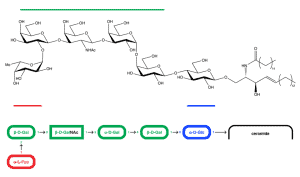
Globo H is a complex carbohydrate antigen belonging to the glycosphingolipid family. Structurally, it consists of a fucosylated hexasaccharide linked to a ceramide lipid backbone. The antigen was originally identified on the human breast cancer cell line MCF-7 and later found in a wide variety of epithelial cancers.
The molecular structure of Globo H includes:
- Fucose residues
- Galactose units
- N-acetylgalactosamine
- Glucose linked to ceramide
This highly specific carbohydrate arrangement contributes to tumor-associated cellular signaling, membrane organization, and immune interactions.
Expression of Globo H in Human Cancers
Extensive research has demonstrated Globo H expression in numerous epithelial tumors, including:
- Breast cancer
- Ovarian cancer
- Gastric carcinoma
- Pancreatic cancer
- Endometrial carcinoma
- Prostate cancer
- Small-cell lung cancer
- Non-small-cell lung cancer
Importantly, Globo H expression is significantly increased in malignant tissues compared with normal tissues, although limited expression can occur on luminal epithelial surfaces of healthy organs such as:
- Breast
- Pancreas
- Lung
- Ovary
- Uterus
- Stomach
- Prostate
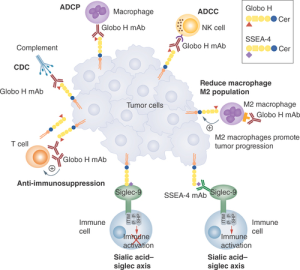
Because Globo H is preferentially associated with tumor cells, it represents a valuable immunotherapeutic target for antibody-mediated cancer destruction.
Development of the Synthetic Globo H-KLH Cancer Vaccine
Rationale for Synthetic Carbohydrate Vaccines
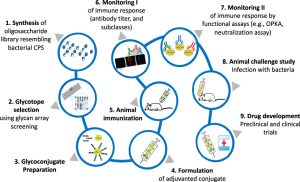
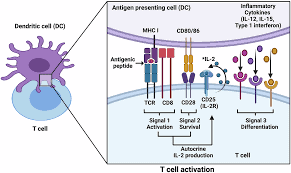
Carbohydrate antigens alone are generally weakly immunogenic because they fail to strongly activate helper T cells. To overcome this limitation, researchers developed conjugate vaccine technologies that chemically link carbohydrate antigens to highly immunogenic carrier proteins.
In this study, the Globo H antigen was chemically conjugated to:
- Keyhole limpet hemocyanin (KLH)
KLH is a large marine mollusk-derived protein widely used in vaccine development because of its strong immunostimulatory properties.
The vaccine formulation also included:
- QS-21 adjuvant
QS-21 is a potent saponin-based immunologic adjuvant known to enhance antibody production and cellular immune responses.
Vaccine Conjugation Strategies
Researchers investigated three separate vaccine formulations to determine whether conjugation chemistry influenced immunogenicity.
1. Direct Globo H-KLH Conjugation
The first strategy involved direct chemical linkage between Globo H and KLH using reductive amination chemistry.
Characteristics included:
- Simpler synthesis procedure
- Lower antigen-to-carrier ratio
- Moderate conjugation yield
2. Crosslinked Globo H-KLH Conjugation
The second strategy used a bifunctional linker molecule called:
- 4-(4-N-maleimidomethyl) cyclohexane-1-carboxyl hydrazide (MMCCH)
This crosslinking approach improved:
- Antigen density
- Conjugation efficiency
- Vaccine yield
- Potential antigen presentation
The crosslinked vaccine achieved significantly higher Globo H-to-KLH ratios compared with direct conjugation.
3. Lyophilized Crosslinked Vaccine Formulation
The third formulation used:
- Crosslinked Globo H-KLH conjugates
- Freeze-dried (lyophilized) preparation
- Reconstitution before administration
Lyophilization improves:
- Vaccine stability
- Long-term storage
- Distribution logistics
Design of the Phase I Clinical Trial
Patient Population
The study enrolled 27 patients with metastatic breast cancer between 1997 and 1999.
Eligible participants included:
- Patients without evidence of disease after therapy
- Patients with stable metastatic disease on hormonal therapy
The median patient age was 46 years.
Patients had previously experienced metastatic involvement in:
- Bone
- Lung
- Chest wall
- Liver
- Lymph nodes
Most patients continued receiving hormonal therapies such as:
- Tamoxifen
- Anastrozole
- Megestrol acetate
Vaccination Schedule
Each patient received:
- Five subcutaneous vaccinations
Vaccination timeline:
- Weeks 1, 2, 3, 7, and 19
Each vaccine dose contained:
- 10 µg synthetic Globo H antigen
- Globo H-KLH conjugate
- 100 µg QS-21 adjuvant
The study divided patients into three groups corresponding to the three vaccine formulations.
Immunological Evaluation of the Globo H Vaccine
ELISA-Based Antibody Detection
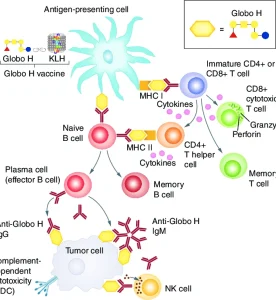
Researchers used enzyme-linked immunosorbent assays (ELISA) to quantify antibody production against Globo H.
The assays demonstrated:
- Strong induction of IgM antibodies
- Limited stimulation of IgG antibodies
Most patients developed measurable IgM responses after vaccination.
Peak antibody titers generally occurred between:
- Weeks 5 and 13
Antibody levels later declined despite booster immunization.
Tumor Cell Recognition by Vaccine-Induced Antibodies
To determine whether vaccine-generated antibodies recognized actual tumor cells, investigators performed:
- Fluorescence-activated cell sorting (FACS)
The analyses evaluated antibody binding to:
- MCF-7 breast cancer cells
Results showed:
- Significant IgM antibody binding in 16 patients
- Limited IgG tumor cell reactivity
These findings confirmed that the vaccine-generated antibodies could recognize naturally expressed Globo H antigens on breast cancer cells.
Complement-Dependent Cytotoxicity and Antitumor Activity
Complement Activation
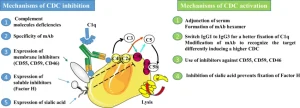
One important mechanism of antibody-mediated cancer destruction is:
- Complement-dependent cytotoxicity (CDC)
CDC occurs when antibodies bind tumor cells and activate the complement cascade, leading to membrane damage and tumor cell lysis.
In this study:
- Several patients developed significant CDC responses
- Increased tumor cell killing was observed after vaccination
This finding provided evidence that the induced antibodies were not only detectable but also functionally active.
Antibody-Dependent Cellular Cytotoxicity (ADCC)
Researchers also evaluated:
- Antibody-dependent cellular cytotoxicity (ADCC)
ADCC involves immune effector cells such as:
- Natural killer cells
- Macrophages
- Cytotoxic leukocytes
These immune cells recognize antibody-coated tumor cells and initiate destruction.
The trial demonstrated:
- Significant ADCC increases in multiple patients
- Enhanced immune-mediated tumor targeting
These results further supported the therapeutic potential of the Globo H vaccine platform.
Affinity Purification and Antibody Specificity
Verification of Globo H-Specific Antibody Responses
To confirm antibody specificity, investigators isolated vaccine-induced antibodies using:
- Globo H affinity chromatography columns
The purified antibodies demonstrated:
- Strong specificity for Globo H
- Minimal cross-reactivity with unrelated carbohydrate antigens such as Ley
This observation is extremely important in cancer vaccine research because it confirms:
- Accurate antigen targeting
- Reduced nonspecific immune activation
- Lower risk of off-target toxicity
Safety and Toxicity Profile of the Vaccine
Overall Vaccine Tolerability
The Globo H-KLH plus QS-21 vaccine demonstrated an acceptable safety profile.
The most common adverse events included:
- Injection-site redness
- Local swelling
- Mild pain
- Flu-like symptoms
- Fatigue
- Myalgia
- Fever
- Arthralgia
Most side effects were:
- Mild
- Temporary
- Self-limiting
Laboratory Toxicities
Some patients experienced transient laboratory abnormalities such as:
- Elevated amylase levels
- Mild hematologic fluctuations
- Minor metabolic changes
One patient developed temporary grade 3 hyperamylasemia, but:
- No pancreatitis occurred
- Symptoms resolved spontaneously
- No long-term complications were observed
Overall, no major:
- Renal toxicity
- Hepatic toxicity
- Autoimmune reactions
- Severe neurologic complications
were associated with vaccination.
Clinical Outcomes and Disease Monitoring
Although tumor response was not the primary objective of this Phase I trial, several encouraging clinical observations were reported.
Among patients without detectable disease at study entry:
- Most remained disease-free during follow-up
Among patients with stable metastatic disease:
- Several maintained stable disease status
Only a limited number of patients experienced disease progression during the observation period.
Because the study population was small and heterogeneous, definitive conclusions regarding clinical efficacy could not be established.
Importance of Polyvalent Cancer Vaccine Strategies
Limitations of Single-Antigen Vaccines
One major challenge in cancer immunotherapy is tumor heterogeneity.
Not all breast cancer cells express identical antigens. Therefore, targeting a single antigen such as Globo H may allow some tumor cells to escape immune surveillance.
To address this limitation, researchers proposed integrating Globo H into:
- Polyvalent cancer vaccines
These vaccines combine multiple tumor-associated carbohydrate antigens, including:
- Globo H
- Ley
- TF antigen
- sTn antigen
Multi-antigen targeting may improve:
- Tumor coverage
- Immune breadth
- Long-term antitumor immunity
- Clinical effectiveness
Scientific Significance of the Study
This Phase I clinical trial represented an important milestone in carbohydrate-based cancer vaccine development because it demonstrated that:
- Fully synthetic carbohydrate vaccines are feasible in humans
- Globo H can induce tumor-reactive antibodies
- Vaccine-induced antibodies mediate biologically active antitumor mechanisms
- Synthetic glycoconjugate vaccines show manageable toxicity profiles
- Crosslinked conjugation methods improve vaccine manufacturing efficiency
The study also provided strong support for continued development of:
- Glycolipid-targeted immunotherapy
- Synthetic cancer vaccines
- Antibody-mediated tumor targeting
- Combination immunotherapeutic approaches
Conclusion
The fully synthetic Globo H-KLH plus QS-21 vaccine demonstrated promising immunogenicity and safety in patients with metastatic breast cancer. Vaccination successfully induced IgM antibodies capable of recognizing Globo H-positive breast cancer cells and mediating complement-dependent cytotoxicity and antibody-dependent cellular cytotoxicity.
Although IgG responses remained limited, the vaccine generated biologically active antitumor immune responses with minimal systemic toxicity. Importantly, no major differences in immune activation were observed among the three vaccine formulations, although the crosslinked conjugation strategy provided superior antigen yield and manufacturing advantages.
These findings support the continued development of Globo H-based immunotherapy and polyvalent carbohydrate cancer vaccines for breast cancer treatment. Future studies focusing on optimized vaccination schedules, stronger adjuvant systems, improved antibody durability, and multi-antigen targeting strategies may further enhance therapeutic efficacy and clinical benefit in oncology immunotherapy.