

Introduction to Retinoids and Cancer Biology
Retinoids are a large family of biologically active compounds derived from vitamin A that play central roles in the regulation of cellular development, tissue maintenance, immune function, and embryogenesis. These molecules are essential for maintaining normal physiological balance in many organs and tissues. Over several decades, retinoids have attracted major scientific interest because of their ability to regulate cell proliferation, cellular differentiation, apoptosis, and tumor suppression. Their biological influence extends across multiple systems, including epithelial tissues, hematopoietic cells, the nervous system, and immune structures.
Among the many biologically active retinoids, all-trans retinoic acid became especially important in oncology after its remarkable therapeutic success in acute promyelocytic leukemia. In this disease, retinoic acid induces malignant immature blood cells to differentiate into mature granulocytes, leading to dramatic clinical responses. This discovery transformed retinoids into promising anticancer agents and stimulated extensive research into their potential applications in cancer prevention and therapy.
As a consequence, retinoids were evaluated in numerous experimental models and clinical trials involving premalignant lesions and solid tumors. Studies demonstrated beneficial effects in several precancerous conditions, including oral leukoplakia, cervical dysplasia, bronchial metaplasia, actinic keratosis, and secondary tumors of the aerodigestive tract. These findings generated enthusiasm for retinoid-based chemoprevention strategies during the late twentieth century.
However, despite encouraging early results, subsequent clinical trials produced inconsistent outcomes. In several large-scale studies, retinoids failed to prevent cancer recurrence or reverse premalignant lesions effectively. Some investigations even suggested harmful effects under specific conditions, particularly among smokers or patients with advanced malignancies. These contradictory findings shifted scientific attention away from broad clinical use and toward understanding the molecular pathways governing retinoid activity in normal and malignant cells.
Modern retinoid research now focuses heavily on the intracellular signaling mechanisms controlled by retinoid receptors, especially the retinoic acid receptors and retinoid X receptors. Particular attention has been directed toward retinoic acid receptor beta, commonly known as RAR-beta, because extensive evidence indicates that this receptor acts as a major tumor suppressor in many human cancers.
Nuclear Retinoid Receptors and Their Biological Functions
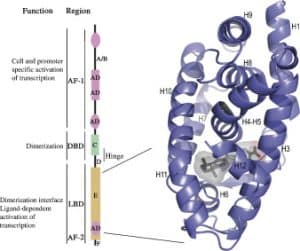
The biological effects of retinoids are mediated primarily through two major receptor families located within the cell nucleus: retinoic acid receptors and retinoid X receptors. These receptors belong to the steroid hormone receptor superfamily and function as ligand-activated transcription factors that regulate gene expression.
Each receptor family contains several subtypes and isoforms that exhibit tissue-specific distribution and biological specialization. Retinoic acid receptor alpha is broadly expressed in many tissues, whereas retinoic acid receptor beta is especially abundant in neural tissues and less detectable in skin. Retinoic acid receptor gamma is predominantly expressed in cutaneous tissues. Similarly, the retinoid X receptor family also displays distinct tissue distribution patterns.
These receptors regulate transcriptional programs involved in cell-cycle control, differentiation, tissue remodeling, immune responses, and apoptosis. Because of their central role in maintaining cellular homeostasis, alterations in receptor expression or signaling can profoundly disrupt normal tissue regulation and contribute to carcinogenesis.
Abnormalities involving retinoid receptors have been identified in multiple malignancies. One of the best-known examples is acute promyelocytic leukemia, in which chromosomal translocations involving the retinoic acid receptor alpha gene generate oncogenic fusion proteins that interfere with normal differentiation pathways. Similar receptor abnormalities have been detected in several solid tumors.
Among all retinoid receptors, the loss of RAR-beta expression has emerged as one of the most consistent molecular abnormalities associated with human cancer development.
RAR-Beta as a Tumor Suppressor Gene
RAR-beta is widely regarded as a critical tumor suppressor receptor involved in regulating epithelial differentiation and inhibiting malignant transformation. Numerous studies have demonstrated that diminished or absent expression of RAR-beta occurs in many human cancers, including malignancies of the lung, breast, head and neck, esophagus, cervix, pancreas, and prostate.
Importantly, the loss of RAR-beta expression is not restricted to advanced cancers. It frequently appears during the earliest stages of carcinogenesis, including dysplasia and premalignant lesions, suggesting that RAR-beta inactivation is an early molecular event in tumor development.
The progressive disappearance of RAR-beta expression during cancer progression strongly supports its protective role in normal tissues. Clinical studies further demonstrated that restoration of RAR-beta expression after retinoid treatment often correlates with therapeutic response and improved tissue differentiation.
Because of these observations, RAR-beta has become an important biomarker in cancer biology. Researchers have investigated both its expression status and promoter methylation patterns as indicators of cancer risk, prognosis, recurrence, and responsiveness to chemopreventive agents.
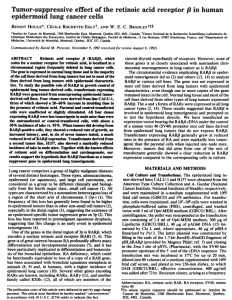
Loss of RAR-Beta Expression in Human Cancers
Reduced expression of RAR-beta has been reported in a broad spectrum of solid tumors. In many cases, the loss becomes progressively more pronounced as tissues transition from normal epithelium to premalignant lesions and eventually invasive carcinoma.
Lung Cancer
In lung cancer, especially non-small cell lung carcinoma, reduced RAR-beta expression is extremely common. Studies have shown that loss of receptor expression is associated with tumor progression, smoking exposure, poor differentiation, and increased recurrence risk.
The methylation status of the RAR-beta promoter has also emerged as a promising biomarker for early lung cancer detection. Detection of methylated RAR-beta DNA in bronchial aspirates, sputum, or serum samples may assist in identifying early malignant transformation before overt tumor formation becomes clinically evident.
Breast Cancer
In breast cancer, hypermethylation of the RAR-beta promoter has been associated with increased cancer risk and abnormal cytological findings. Benign breast tissues from patients who later developed cancer often exhibit higher frequencies of promoter methylation compared with tissues from healthy individuals.
RAR-beta silencing in breast epithelial cells may contribute to loss of differentiation, increased proliferation, and resistance to retinoid therapy.
Esophageal Cancer
Esophageal carcinogenesis is strongly linked to suppression of RAR-beta expression. Environmental carcinogens such as tobacco-derived compounds and bile acids can directly suppress receptor expression and promote epigenetic silencing of the RAR-beta gene.
Loss of receptor expression correlates with resistance to retinoid-induced growth inhibition and enhanced malignant progression.
Head and Neck Cancer
In head and neck squamous cell carcinoma, reduced RAR-beta expression is among the most consistent molecular abnormalities detected in premalignant lesions. Restoration of receptor expression following retinoid therapy often correlates with clinical regression of lesions.
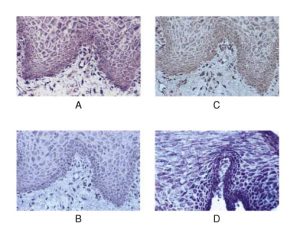
Epigenetic Silencing of RAR-Beta
One of the most important mechanisms responsible for loss of RAR-beta expression is epigenetic silencing through promoter hypermethylation.
DNA methylation involves the addition of methyl groups to cytosine residues within CpG-rich regions of gene promoters. This process alters chromatin structure and prevents transcriptional activation, effectively shutting down gene expression without altering the DNA sequence itself.
The RAR-beta promoter is highly susceptible to hypermethylation during carcinogenesis. This epigenetic modification has been documented in numerous cancers, including lung, breast, esophageal, cervical, and prostate malignancies.
Several observations strongly support the role of promoter methylation in RAR-beta silencing:
- Cancer cells with methylated RAR-beta promoters exhibit reduced receptor expression.
- Demethylating agents can restore RAR-beta expression.
- Tobacco carcinogens induce promoter methylation experimentally.
- Premalignant tissues frequently show early methylation events before invasive transformation occurs.
Environmental carcinogens such as cigarette smoke components, benzoapyrene derivatives, and inflammatory mediators contribute significantly to these epigenetic alterations.
Interestingly, natural compounds with chemopreventive activity, including epigallocatechin gallate derived from green tea, have been shown to inhibit DNA methyltransferases and reactivate RAR-beta expression in cancer cells.
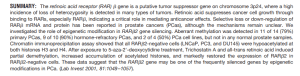
Retinoid Resistance and RAR-Beta Silencing
Loss of RAR-beta expression is closely linked to resistance against retinoid therapy.
Many cancer cell lines lacking RAR-beta expression become unresponsive to the growth-inhibitory and differentiation-inducing effects of retinoic acid. This suggests that intact receptor signaling is necessary for effective retinoid-mediated tumor suppression.
RAR-alpha also plays an important role in regulating RAR-beta transcription. Impaired retinoic acid signaling through RAR-alpha can worsen chromatin repression and further suppress RAR-beta expression.
In vitamin A-deficient tissues, reduced intracellular retinoid availability additionally contributes to receptor silencing. Several premalignant tissues exhibit abnormal retinoid metabolism characterized by decreased uptake or excessive degradation of vitamin A derivatives.
Collectively, these findings indicate that retinoid resistance often results from defective receptor signaling pathways rather than simple absence of therapeutic compounds.
RAR-Beta Isoforms and Their Biological Significance
RAR-beta exists in multiple isoforms generated through alternative promoter usage and alternative splicing mechanisms. These isoforms possess distinct biological functions and may exert opposite effects on tumor development.
RAR-Beta2
RAR-beta2 is the most extensively studied isoform and is widely considered the primary tumor suppressor variant. It is highly inducible by retinoic acid and regulates genes involved in differentiation, apoptosis, and growth inhibition.
Experimental restoration of RAR-beta2 expression suppresses tumor growth, reduces metastasis, induces apoptosis, and restores sensitivity to retinoid therapy in multiple cancer models.
Loss of RAR-beta2 expression has therefore become a hallmark of malignant progression.
RAR-Beta4
In contrast, RAR-beta4 appears to possess oncogenic or tumor-promoting properties.
Unlike RAR-beta2, this isoform lacks critical domains required for normal DNA-binding activity and may function as a dominant-negative regulator that interferes with tumor-suppressive signaling pathways.
Increased RAR-beta4 expression has been reported in several cancers, including lung and esophageal malignancies. Experimental models demonstrated that elevated RAR-beta4 expression enhances tumor cell proliferation and promotes hyperplastic and neoplastic changes.
The balance between RAR-beta2 and RAR-beta4 expression may therefore be critically important in determining whether retinoid signaling suppresses or promotes tumor progression.
Molecular Mechanisms of Tumor Suppression by RAR-Beta2
RAR-beta2 exerts antitumor effects through regulation of multiple molecular pathways involved in proliferation, survival, inflammation, invasion, and metastasis.
Suppression of EGFR Signaling
RAR-beta2 inhibits epidermal growth factor receptor signaling, a pathway frequently overactivated in human cancers. EGFR activation promotes uncontrolled proliferation, resistance to apoptosis, and tumor progression.
By suppressing EGFR activity, RAR-beta2 reduces downstream activation of oncogenic signaling cascades.
Inhibition of MAPK and ERK Pathways
RAR-beta2 suppresses phosphorylation of ERK signaling proteins involved in the mitogen-activated protein kinase pathway. This results in reduced proliferative signaling and enhanced growth arrest.
Downregulation of AP-1 Activity
Activator protein one is a major transcription factor involved in tumor promotion, invasion, inflammation, and metastasis. RAR-beta2 strongly inhibits AP-1 activity, thereby suppressing expression of genes associated with malignant behavior.
Suppression of COX-2 Expression
Cyclooxygenase-2 is an inflammatory enzyme commonly overexpressed in aggressive cancers. Elevated COX-2 levels are associated with enhanced angiogenesis, resistance to apoptosis, and poor prognosis.
RAR-beta2 suppresses COX-2 expression, and this effect appears central to its antitumor activity. Experimental evidence suggests that tumors lacking COX-2 expression respond differently to RAR-beta2 restoration, highlighting the importance of inflammatory signaling pathways.
Regulation of Cytoskeletal Dynamics
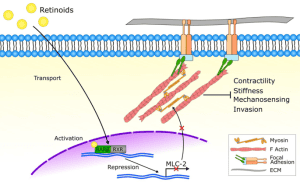
RAR-beta2 also regulates genes involved in cytoskeletal organization and cell motility. One important downstream target is RRIG1, a membrane-associated protein that inhibits RhoA signaling.
Through RRIG1-mediated suppression of RhoA activity, RAR-beta2 reduces actin remodeling, invasion, colony formation, and metastatic potential.
Role of MicroRNAs in RAR-Beta Regulation
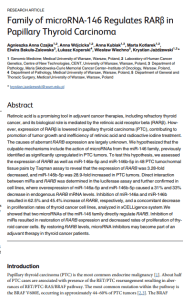
Emerging evidence suggests that microRNAs may regulate RAR-beta expression in cancer cells.
MicroRNAs are small noncoding RNA molecules that suppress gene expression post-transcriptionally. Several microRNAs are predicted to target RAR-beta transcripts directly, potentially contributing to altered isoform expression during carcinogenesis.
Changes in microRNA expression patterns may therefore explain why certain tumors exhibit reduced RAR-beta2 expression while simultaneously overexpressing oncogenic isoforms such as RAR-beta4.
This area remains under active investigation and may provide novel therapeutic opportunities.
RAR-Beta and Cancer Prevention Strategies
Because RAR-beta loss occurs early during carcinogenesis, restoring its expression represents an attractive strategy for cancer prevention.
Approaches currently under investigation include:
- Retinoid-based therapies
- DNA demethylating agents
- Histone deacetylase inhibitors
- EGFR inhibitors
- Natural dietary compounds
- Combination therapies targeting epigenetic regulation
Although clinical outcomes have been mixed, growing understanding of receptor isoforms, epigenetic mechanisms, and signaling networks may eventually allow more personalized and effective retinoid-based interventions.
Future Perspectives
Research into RAR-beta biology continues to evolve rapidly. Several critical questions remain unresolved:
- Why do different RAR-beta isoforms exert opposite biological effects?
- How does RAR-beta4 promote tumor progression?
- Which signaling pathways are uniquely controlled by each isoform?
- How do environmental carcinogens induce selective receptor silencing?
- Can epigenetic therapies reliably restore functional RAR-beta2 expression?
- Which patient populations are most likely to benefit from retinoid-based therapies?
Future studies integrating molecular biology, epigenetics, cancer genomics, and targeted therapeutics will be essential for answering these questions.
Conclusion
RAR-beta represents one of the most important retinoid-regulated tumor suppressors identified in human cancer biology. Extensive evidence demonstrates that loss of RAR-beta2 expression contributes significantly to carcinogenesis through disruption of differentiation, apoptosis, inflammatory control, and growth regulation pathways.
Epigenetic silencing of the RAR-beta gene is a common early event in multiple cancers and has strong potential as a diagnostic, prognostic, and therapeutic biomarker. At the same time, the discovery of oncogenic RAR-beta isoforms such as RAR-beta4 has revealed a far more complex signaling network than previously recognized.
The dualistic nature of RAR-beta signaling may explain the contradictory results historically observed in retinoid-based clinical trials. Continued investigation into receptor isoform biology, chromatin regulation, and retinoid signaling pathways will likely open new avenues for precision cancer prevention and therapy in the future.