
Introduction to SARS-CoV-2 and Animal Surveillance
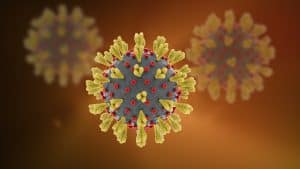
Since the emergence of Coronavirus Disease 2019 (COVID-19) at the end of 2019, the world has faced one of the most significant global public health crises of modern times. The disease is caused by Severe Acute Respiratory Syndrome Coronavirus 2 (SARS-CoV-2), a highly transmissible betacoronavirus that was first identified in Wuhan, China. Within a few months, the virus spread rapidly across continents and evolved into a worldwide pandemic associated with millions of confirmed infections, severe respiratory complications, and extensive mortality.
COVID-19 presents with a wide spectrum of clinical manifestations in humans. Some infected individuals remain asymptomatic, whereas others develop mild respiratory illness characterized by fever, fatigue, dry cough, muscle pain, and shortness of breath. In severe cases, SARS-CoV-2 infection can progress to pneumonia, acute respiratory distress syndrome, multi-organ failure, and death. Human-to-human transmission occurs mainly through respiratory droplets, aerosols, and contaminated surfaces, making viral spread extremely efficient in densely populated environments.
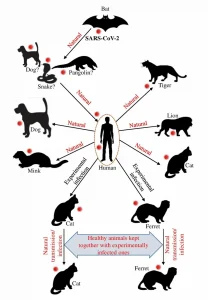
Although SARS-CoV-2 is now primarily maintained through human transmission, extensive molecular and epidemiological evidence suggests that the virus originally emerged from an animal reservoir. Genetic analyses demonstrated a strong similarity between SARS-CoV-2 and coronaviruses circulating in bats and pangolins, indicating a zoonotic origin. This observation raised major scientific concerns regarding the possibility of cross-species transmission and the establishment of new animal reservoirs capable of maintaining and reintroducing the virus into human populations.
Importance of Monitoring SARS-CoV-2 in Animals
The identification of animal species susceptible to SARS-CoV-2 rapidly became a major priority in both veterinary and biomedical research. The susceptibility of an animal species is strongly associated with the compatibility of its angiotensin-converting enzyme 2 (ACE2) receptor, which serves as the primary viral entry receptor for SARS-CoV-2. Several domestic, farmed, captive, and wild animal species possess ACE2 receptor structures highly similar to those found in humans, increasing the probability of infection.
As the pandemic evolved, naturally acquired SARS-CoV-2 infections were documented in multiple animal species. Reports confirmed infections in domestic cats and dogs, captive tigers and lions, and farmed minks. In most situations, infected animals had direct contact with SARS-CoV-2-positive humans, including owners, handlers, veterinarians, or caretakers. These findings demonstrated the possibility of reverse zoonosis, also known as human-to-animal transmission.
Experimental infection studies later expanded the list of susceptible species and showed that ferrets, hamsters, raccoon dogs, and fruit bats could also support viral replication and antibody development after exposure to SARS-CoV-2. However, despite growing evidence of animal susceptibility, the real prevalence of infection in natural animal populations remained poorly understood. This created an urgent need for reliable surveillance tools capable of identifying previous exposure to the virus in a broad range of species.
Challenges of Direct Viral Detection in Animals
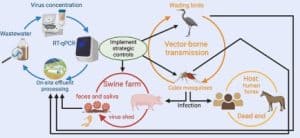
Most early diagnostic investigations in animals relied on molecular detection techniques such as real-time reverse transcription polymerase chain reaction (RT-PCR). These assays are highly sensitive and specific because they directly detect viral RNA in clinical samples. However, one important limitation of RT-PCR is that animals remain PCR-positive only for a short period after infection. Once viral shedding declines, infected animals may no longer test positive even though they were previously exposed to the virus.
This limitation significantly reduces the effectiveness of molecular testing for large-scale epidemiological studies and retrospective investigations. To better understand viral circulation in animal populations, researchers therefore turned toward serological testing approaches capable of detecting antibodies generated after infection.
Antibody detection assays are particularly useful because antibodies can remain detectable for weeks or months after exposure. Consequently, serological surveillance provides valuable information regarding previous infection history, exposure rates, species susceptibility, and potential transmission pathways.
Advantages of ELISA-Based Antibody Detection
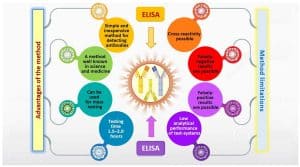 Among the different serological techniques available, enzyme-linked immunosorbent assays (ELISAs) became one of the most attractive tools for SARS-CoV-2 antibody detection in animals. Traditional virus neutralization tests are highly reliable and species-independent because they evaluate the capacity of antibodies to block viral infection in cell culture systems. However, these methods require handling infectious SARS-CoV-2 in high-containment biosafety laboratories, making them labor-intensive, expensive, and unsuitable for high-throughput screening.
ELISA technology offers several important advantages over neutralization assays. These assays can be performed under lower biosafety conditions, are easier to standardize, and allow rapid screening of large numbers of samples. In veterinary diagnostics, ELISAs are especially valuable because they can be adapted for use across multiple animal species, supporting large-scale epidemiological monitoring programs.
A critical challenge in developing SARS-CoV-2 ELISAs for animals involves selecting the most appropriate viral antigen. Coronaviruses are widespread among animal species, including numerous alpha- and betacoronaviruses that circulate naturally in livestock, companion animals, and wildlife. Because some coronavirus proteins share structural similarities, cross-reactivity may occur and generate false-positive results.
Selection of the SARS-CoV-2 Spike Protein RBD
To improve diagnostic specificity, researchers focused on the SARS-CoV-2 spike protein, particularly the receptor-binding domain (RBD). The spike protein plays a central role in viral attachment and entry into host cells, and the RBD represents the key region responsible for interaction with the ACE2 receptor.
Compared with other viral proteins such as the nucleocapsid protein, the RBD region is less conserved among different coronaviruses. This reduced conservation minimizes cross-reactivity with antibodies generated against non-SARS-related animal coronaviruses. As a result, RBD-based ELISA systems demonstrate significantly higher specificity and accuracy.
In the study, researchers produced recombinant forms of the SARS-CoV-2 spike protein S1 subunit and the receptor-binding domain using mammalian cell expression systems. The proteins were purified and validated using biochemical methods including SDS-PAGE and Western blot analysis to confirm correct expression and antigenicity.
Development of the Multi-Species ELISA Protocol
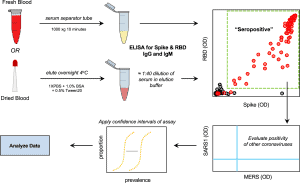
The ELISA protocol was optimized through extensive evaluation of antigen concentration, serum dilution, and conjugate conditions. Researchers compared the diagnostic performance of the full S1 domain and the isolated RBD domain as capture antigens.
The receptor-binding domain consistently generated stronger positive signals and lower background noise than the S1 antigen. Negative animal sera also showed reduced nonspecific reactivity with the RBD-coated plates, confirming the superior specificity of this antigenic region.
Further optimization demonstrated that specific serum and conjugate dilutions produced the best signal-to-noise ratio. The final assay configuration therefore relied on the RBD antigen combined with optimized incubation and washing conditions to maximize sensitivity while minimizing false-positive reactions.
An important feature of the assay was its multi-species capability. Instead of requiring a separate diagnostic platform for each animal species, the ELISA employed conjugates capable of recognizing antibodies from multiple animals, including cats, cattle, ferrets, raccoon dogs, rabbits, hamsters, and poultry species.
Evaluation of Diagnostic Sensitivity and Specificity
To validate the assay, researchers analyzed a large panel of animal sera collected before the COVID-19 pandemic as well as sera from experimentally infected or naturally infected animals.
Negative control samples originated from multiple species and included animals previously exposed to other coronaviruses such as bovine coronavirus. This was particularly important for evaluating cross-reactivity and confirming assay specificity.
The final ELISA protocol demonstrated exceptionally high diagnostic performance. Receiver operating characteristic analysis confirmed excellent assay accuracy, with near-perfect discrimination between positive and negative samples.
The test achieved extremely high specificity, meaning that false-positive results were very rare even in animals carrying antibodies against related animal coronaviruses. This finding highlighted the value of using the receptor-binding domain as the primary diagnostic antigen.
Sensitivity was also remarkably high. Nearly all SARS-CoV-2-positive animal sera were correctly identified, including samples collected relatively early after infection. Antibody responses were detectable in multiple susceptible species such as ferrets, raccoon dogs, cats, cattle, and hamsters.
Detection of Early Seroconversion in Animals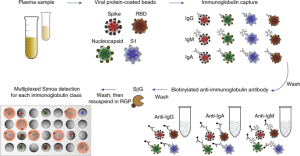
One of the most important observations was the rapid development of detectable antibody responses after infection. Several animal species generated measurable antibodies within days following viral exposure. This early seroconversion pattern resembles observations in humans, where antibodies often become detectable during the second week after infection.
The ability to identify early antibody responses is particularly important for outbreak investigations and transmission studies. It allows researchers to reconstruct infection timelines, identify exposed populations, and assess viral spread within animal communities.
Only one experimentally infected ferret produced a weak antibody response that was not consistently detected by all serological methods. Nevertheless, the overall performance of the ELISA remained highly reliable across species and infection stages.
Repeatability and Reliability of the ELISA System
To ensure diagnostic consistency, the assay underwent extensive repeatability and reproducibility testing. Multiple serum samples were tested repeatedly across independent assay runs.
The results demonstrated very low variability between replicates and excellent assay stability. Both strongly positive and negative sera consistently generated accurate results, confirming the robustness of the protocol.
Even weak-positive samples remained detectable within the assay threshold range, demonstrating the sensitivity of the system for identifying low-level antibody responses. These characteristics are essential for surveillance programs where diagnostic precision directly affects epidemiological interpretation.
Applications of Multi-Species SARS-CoV-2 ELISA in Veterinary Surveillance
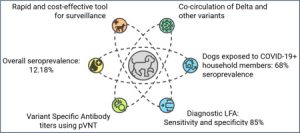
The development of a reliable multi-species SARS-CoV-2 ELISA provides major advantages for veterinary medicine, zoonotic disease surveillance, and One Health research initiatives.
This diagnostic approach can support:
- Large-scale epidemiological monitoring of domestic and wild animals
- Detection of previously exposed animal populations
- Investigation of animal reservoirs and intermediate hosts
- Monitoring of zoonotic transmission events
- Evaluation of vaccine responses in experimental animal models
- Surveillance of farmed animals and captive wildlife
- Risk assessment for interspecies viral transmission
Because the assay does not require infectious virus handling, it can be implemented in standard veterinary diagnostic laboratories without the need for high-containment biosafety facilities. This significantly increases accessibility and scalability for global surveillance efforts.
Significance of RBD-Based Serological Testing
The success of the receptor-binding domain as a diagnostic antigen highlights its importance in coronavirus serology. By minimizing cross-reactivity while maintaining strong antibody recognition, RBD-based ELISAs provide a highly accurate strategy for differentiating SARS-CoV-2 exposure from infections caused by other animal coronaviruses.
This specificity is particularly valuable in veterinary settings where numerous coronaviruses naturally circulate among livestock, pets, and wildlife species. Reliable differentiation is essential for accurate prevalence studies and outbreak tracking.
Conclusion
The establishment of a multi-species ELISA targeting the SARS-CoV-2 receptor-binding domain represents a major advancement in veterinary diagnostic technology and zoonotic disease surveillance. The assay combines high sensitivity, excellent specificity, broad species applicability, and strong reproducibility, making it a powerful tool for monitoring SARS-CoV-2 exposure in animals.
By enabling efficient antibody detection across multiple species without requiring high-level biosafety laboratories, this ELISA platform supports large-scale epidemiological studies and contributes to a deeper understanding of SARS-CoV-2 transmission dynamics between humans and animals.
As emerging infectious diseases continue to threaten global public health, versatile serological platforms such as multi-species SARS-CoV-2 ELISAs will remain essential for strengthening surveillance systems, identifying potential reservoirs, and supporting integrated One Health approaches to pandemic preparedness and control.